
Pre-Purchase Termite Inspection Mill Park | AS 4349.3-Compliant Pest & Building Reports
Buying a property in Mill Park is one of the most significant financial decisions most people will make in their lifetime. A pre-purchase termite inspection is not an optional extra — it is the single most important step you can take to protect that investment before contracts are signed. Termite damage is not covered by home insurance in Australia, and by the time most buyers discover an active infestation after moving in, the repair bill can range from $10,000 to well over $50,000. Mill Park and Melbourne’s northern suburbs sit in one of Victoria’s higher-risk termite zones, with established populations of Coptotermes acinaciformis — Australia’s most destructive subterranean termite — foraging through the clay-rich soils of the region’s established residential areas.
At M&R Termite Solutions, our licensed inspectors carry out thorough pre-purchase termite inspections in full compliance with Australian Standard AS 4349.3, using Termatrac microwave detection, thermal imaging cameras, and calibrated moisture meters to identify active infestations, evidence of past termite activity, wood borer damage, fungal decay, and the environmental conditions that signal elevated future risk. Reports are delivered the same day or within 24 hours and are formatted to give you maximum negotiating power before your cooling-off period expires.
Why a Pre-Purchase Termite Inspection Is Non-Negotiable in Mill Park
The Risk Is Greater Than Most Buyers Realise
Melbourne’s northern suburbs — including Mill Park, Bundoora, Greensborough, Eltham, and Doncaster — are consistently identified as elevated-risk termite zones by pest management professionals and building surveyors. The region’s combination of reactive clay subsoils that retain moisture at depth, established native vegetation in Plenty Gorge Parklands and local reserve corridors, and a substantial stock of timber-framed homes built between the 1960s and 1990s creates ideal conditions for large subterranean termite colonies to thrive within close range of residential properties.
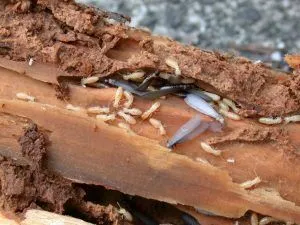
Critically, termites are designed to remain undetected. They consume structural timber from the inside out, leaving a paper-thin outer surface intact to maintain the sealed, humid environment the colony requires. A property can sustain an active termite infestation for two, three, or even five years before any visible evidence appears — often not until a door frame warps, a floor surface becomes spongy, or a wall surface buckles under light pressure. By that point, the structural damage is already extensive and expensive.
A standard building inspection carried out by a general building inspector — while valuable for identifying structural defects — does not include the specialised pest detection tools, training, or AS 4349.3 compliance required to reliably identify termite activity in concealed spaces. M&R Termite Solutions provides dedicated, specialised pre-purchase termite inspections that go beyond what a combined building-and-pest inspection typically delivers. Our technicians carry out thousands of subfloor, roof void, and wall cavity assessments in Mill Park and surrounding suburbs each year and know exactly where to look.
What Our Pre-Purchase Termite Inspection Includes
A Comprehensive Assessment Across Every Accessible Area of the Property
Our pre-purchase termite inspections are carried out in strict compliance with Australian Standard AS 4349.3 — the national standard for timber pest inspections. This standard defines the minimum inspection scope, the equipment required, and the format of the inspection report. Every inspection M&R Termite Solutions performs meets or exceeds these requirements:
Subfloor Inspection
The subfloor is the most critical inspection zone for subterranean termite activity. Our inspector physically enters the subfloor space (where accessible) and systematically examines all bearers, joists, stumps, piers, and the underside of flooring for mud tubes, termite galleries, active termite presence, past damage, wood borer exit holes, and evidence of fungal decay (timber rot). Moisture levels in subfloor timbers are measured at multiple points using a calibrated moisture meter. Elevated subfloor moisture is one of the strongest predictors of current or future termite activity.
Roof Void Inspection
The roof void is inspected for mud tubes on rafters, top plates, ceiling joists, and any stored timber. Evidence of active termite activity in the roof void is a serious finding that indicates a large, established colony with access to the full structural fabric of the building. The condition of roof void timbers for both termite damage and wood borer activity is assessed and documented.
Interior Inspection — All Accessible Rooms
Every accessible interior room is inspected systematically. Skirting boards, door and window frames, architraves, and floor surfaces are tapped to identify hollow-sounding sections indicative of termite damage beneath the surface. Built-in cabinetry, cupboards, and any timber features are checked. Thermal imaging is used in high-risk zones (wet areas, external walls, areas near known moisture sources) to detect the heat differential of active termite galleries within wall cavities.
Exterior and Garden Inspection
The complete exterior of the building is assessed: external wall timbers, verandah posts, decking, pergola structures, fences, garden sheds, and retaining walls. The immediate garden perimeter — including trees, stumps, garden beds with organic mulch, sleeper retaining walls, and any timber in ground contact within 50 metres of the building — is examined for termite activity. Mud tube presence on external walls, termite alate (winged termite) emergence points, and evidence of Nasutitermes arboreal mound activity in garden trees are all documented.
Assessment of Conditions Conducive to Future Infestation
Under AS 4349.3, inspectors must not only report on active pest activity and past damage — they must also identify and document environmental conditions that create elevated risk of future infestation. These ‘conditions conducive’ include: poor subfloor ventilation; garden beds built above weep holes or the damp-proof course; timber in direct soil contact; leaking downpipes or plumbing that creates sustained subfloor moisture; existing chemical barrier systems that have been bridged by subsequent construction; and trees or stumps within foraging distance of the building structure.
Timber Pest Categories Assessed
The inspection covers all four AS 4349.3 timber pest categories — not just termites. Our reports document findings across: (1) subterranean and drywood termites (active and historic evidence); (2) wood borers (active flight holes, frass, larval galleries); (3) fungal decay / timber rot (wet rot and dry rot affecting structural timbers); and (4) conditions conducive to timber pest attack as described above.
Detection Technology We Use — Beyond the Visual Inspection
Modern Tools for Reliable Detection in Concealed Spaces
A visual-only inspection — torch and probe — can miss termite activity concealed within wall cavities, behind bathroom tiles, inside structural voids, or in areas of the building inaccessible without destructive investigation. M&R Termite Solutions equips every pre-purchase inspection with advanced detection tools that significantly improve the reliability of concealed pest identification:
- Termatrac T3i (microwave radar detection): the Termatrac uses low-power microwave technology to detect termite movement through walls, timber, and other building materials without physical penetration. It can confirm termite presence in wall cavities and structural voids where visual inspection cannot reach, providing objective evidence of active colony movement that supports the inspection report findings.
- Thermal imaging camera: our technicians use thermal imaging to identify heat differentials within wall cavities caused by the metabolic activity of active termite colonies. Thermal imaging also identifies moisture intrusion — elevated moisture in wall cavities and subfloor zones is a direct predictor of termite risk and is documented as a ‘condition conducive’ in the report.
- Calibrated moisture meter: subfloor and structural timber moisture levels are measured at multiple points using a calibrated moisture meter. Readings above 20% moisture content in structural timber represent an elevated risk environment; readings above 28% indicate conditions where fungal decay (timber rot) is likely to be active.
- Sounding / percussion testing: the systematic tapping of all accessible timber surfaces — skirting boards, door frames, architraves, wall panels — remains an essential technique for identifying hollow-sounding timber indicative of termite galleries or structural voids from internal decay.
What Your Pre-Purchase Termite Inspection Report Contains
A Clear, Actionable Document Designed for Property Buyers
The written inspection report is the primary deliverable from a pre-purchase termite inspection — and it is a document with real financial and legal significance. M&R Termite Solutions reports comply with AS 4349.3 and are written in plain English for property buyers, not pest control professionals. Every report includes:
- A clear summary of findings — separating active timber pest activity, evidence of past infestation, current damage assessment, and conditions conducive to future pest attack.
- Photographic evidence — all significant findings are documented with labelled photographs showing the location and nature of the issue.
- A risk classification — the property’s overall timber pest risk level is rated in accordance with AS 4349.3 classifications, providing a clear framework for understanding the severity of findings.
- Specific treatment and investigation recommendations — where active activity is found, the report recommends the appropriate treatment method (dusting, baiting, chemical barrier) and urgency level; where concealed activity is suspected but cannot be confirmed without destructive investigation, this is stated explicitly.
- Limitations of inspection — a compliant AS 4349.3 report must document all areas that could not be inspected and the reasons why (inaccessible subfloor, sealed roof void access, furniture obstructing wall areas). This protects both the buyer and the inspector and is required by the standard.
- Report delivery within 24 hours — in most cases M&R Termite Solutions delivers the completed report on the day of inspection or by the following morning, meeting the time constraints of property purchase negotiations.
Using Your Report to Negotiate — Your Most Powerful Buying Tool
How a Termite Inspection Report Creates Negotiating Leverage
A pre-purchase termite inspection report is not just peace of mind — in the hands of an informed buyer, it is a negotiating instrument that can save tens of thousands of dollars or prevent a catastrophic purchase decision entirely. Here is how Mill Park property buyers use their M&R Termite Solutions report strategically:
Price Reduction: If the report identifies active termite infestation, evidence of past termite damage, wood borer activity, or significant timber rot, you have documented grounds to request a formal price reduction that reflects the cost of remediation. The report’s treatment and investigation recommendations provide an objective basis for quantifying this cost — typically with reference to treatment quotes from licensed pest controllers.
Require Pre-Settlement Treatment: Rather than accepting a price reduction, some buyers prefer to require the vendor to complete professional termite treatment before settlement. The M&R Termite Solutions report documents the findings and recommended treatment method, which can be written directly into the contract of sale as a vendor obligation prior to settlement.
Request Further Investigation: If the report reveals concealed areas that could not be inspected (sealed subfloor, inaccessible roof void) along with conditions conducive to termite activity, buyers can request invasive investigation — opening limited sections of wall cladding or flooring — as a condition of proceeding. This is particularly relevant for older timber-framed homes in Mill Park’s established residential areas.
Withdraw from Purchase: A pre-purchase inspection that reveals significant findings can provide grounds to withdraw from purchase entirely within the cooling-off period, depending on the terms of the contract and whether a satisfactory pest and building clause was included. Your solicitor or conveyancer should be consulted on the specific contractual provisions applicable to your purchase.
Mill Park Property Risk Factors — What Our Inspectors Look For
Local Knowledge That Makes a Difference
Mill Park’s specific combination of property types, soil conditions, and surrounding environment creates a distinct risk profile that our inspectors understand from years of local experience. Key risk factors we examine on Mill Park properties include:
- Timber-framed construction on stumps (1960s–1990s housing): properties of this era have subfloor spaces that provide direct access between soil and structural timber, and many have never had a chemical barrier treatment. Stump tops and the underside of flooring are priority inspection zones.
- Clay subsoil moisture retention: Mill Park’s reactive clay subsoils retain moisture at depth particularly in lower-lying areas and around drainage channels, sustaining subterranean termite colonies within foraging distance of buildings year-round.
- Proximity to Plenty Gorge Parklands and local reserve corridors: native termite habitat in the adjacent bushland provides a permanent colony source within foraging range of residential properties on the suburb’s eastern and northern boundaries.
- Sleeper retaining walls and garden timber: timber retaining walls, garden edging, and landscape sleepers in direct soil contact are a primary food source and harborage zone for Coptotermes acinaciformis and are a specific risk feature on many Mill Park properties with sloped gardens.
- Previous chemical barrier systems: many established Mill Park homes have chemical soil barriers installed under previous owners, often decades ago, that may have expired, been bridged by subsequent construction, or been compromised by landscaping works. These systems must be assessed — not assumed to be current or effective.
- Concrete slab construction (1990s–2000s): slab-on-ground construction is not termite-proof — termites exploit slab edge gaps, expansion joints, and service penetrations. Properties in Mill Park’s newer estates with no barrier treatment history require careful assessment of these access points.
Pre-Purchase Termite Inspection Costs in Mill Park
What to Expect — and Why It Is Always Worth It
The cost of a pre-purchase termite inspection in Mill Park varies based on the size and construction type of the property, the accessibility of the subfloor and roof void, and whether advanced detection technology (Termatrac, thermal imaging) is included. As a general guide:
- Standalone termite inspection (AS 4349.3 compliant): $280–$450 for a standard residential property in Mill Park.
- Combined building and pest inspection: $450–$700 for a standard residential property, depending on the building inspector used and whether the pest component is carried out by a licensed termite specialist.
- Larger properties, properties with complex subfloor access, or those requiring extensive Termatrac or thermal imaging assessment may attract additional costs — discussed and agreed before the inspection begins.
- Report delivery: same day or within 24 hours for all M&R Termite Solutions pre-purchase inspections.
Why Mill Park Property Buyers Choose M&R Termite Solutions
Not all pre-purchase pest inspections are equal — and in a high-stakes property transaction, the quality of the inspector and the thoroughness of the report can be the difference between a sound investment and a financially devastating purchase. Here is why property buyers in Mill Park and Melbourne’s northern suburbs trust M&R Termite Solutions for pre-purchase termite inspections:
- AS 4349.3-compliant inspections: every pre-purchase inspection is carried out and reported in strict compliance with the national standard for timber pest inspections — providing documentation that is legally recognised and suitable for conveyancing, insurance, and dispute resolution purposes.
- Advanced detection technology: Termatrac microwave detection, thermal imaging cameras, and calibrated moisture meters are used on every inspection — not optional extras. These tools are essential for reliable detection of concealed termite activity in the wall cavities and structural voids common in Mill Park’s older housing stock.
- Specialist termite expertise: our inspectors are not generalist building inspectors with a pest component bolted on. M&R Termite Solutions is a specialist termite and pest management company with over 20 years of dedicated experience in Mill Park and Melbourne’s northern suburbs.
- Same-day or 24-hour report delivery: pre-purchase inspections are time-sensitive. We understand that cooling-off periods are short and that property buyers need reports quickly to act on their findings.
- Independent, unbiased reporting: we have no relationship with the vendor, the real estate agent, or the building industry. Our report reflects what we find — nothing more, nothing less.
- Fully licensed and insured: all inspectors hold current pest management licences and appropriate professional indemnity and public liability insurance. Reports are signed by a named licensed inspector, as required by AS 4349.3.
- Follow-up consultation: after delivering the report, our inspector is available to discuss the findings, explain the recommendations, and advise on how to use the report in your negotiations — at no additional charge.
Our team has years of hands-on experience working in Melbourne’s northern suburbs. We understand the specific challenges faced by homeowners and property managers in areas like Greensborough, Bundoora, Kingsbury, Doncaster, Templestowe, Epping, Heidelberg, Heidelberg West and more.
Frequently Asked Questions – FAQs
How much does a pre-purchase termite inspection cost in Mill Park?
A standalone AS 4349.3-compliant pre-purchase termite inspection in Mill Park typically costs $280–$450 for a standard residential property. A combined building and pest inspection (where both a building inspector and a licensed pest inspector attend) typically costs $450–$700. M&R Termite Solutions provides transparent, upfront pricing with no hidden fees. Call 0413 716 233 for a quote specific to the property you are considering.
Do I need a separate termite inspection if I’m getting a building and pest inspection?
Not necessarily — but quality varies significantly. A combined building and pest inspection carried out by a single inspector may not provide the same level of termite-specific expertise, detection technology, or AS 4349.3 compliance as a dedicated specialist termite inspection. In Mill Park’s higher-risk termite environment, we recommend confirming that the pest component of any combined inspection is carried out by a licensed termite specialist using Termatrac and thermal imaging equipment — not just a visual inspection.
How long does a pre-purchase termite inspection take?
A thorough AS 4349.3-compliant inspection of a standard three- to four-bedroom Mill Park property typically takes 60–90 minutes on-site. Larger properties, those with complex subfloor access, or those with multiple outbuildings and garden structures may take longer. The written report is delivered the same day or within 24 hours of the inspection.
What if termites are found — can I still buy the property?
Yes — and in many cases, finding termite activity is actually a negotiating advantage rather than a reason to walk away. A professional report documenting active termite infestation and the recommended treatment approach gives you documented grounds to negotiate a price reduction, require vendor-funded treatment before settlement, or both. The key is acting within your cooling-off period and, if necessary, including a satisfactory building and pest inspection clause in the contract before signing. Consult your conveyancer or solicitor about your specific contractual position.
What’s the difference between a termite inspection and a general pest inspection?
A termite inspection (AS 4349.3) is specifically focused on timber pests — termites, wood borers, fungal decay, and conditions conducive to their activity. It involves specialist detection tools (Termatrac, thermal imaging, moisture meters) and a report structured around timber pest risk categories. A general pest inspection covers a broader range of pests (rodents, cockroaches, ants, spiders) but typically does not include the same level of termite-specific assessment, detection technology, or AS 4349.3 compliance. For a pre-purchase inspection in a higher-risk area like Mill Park, a dedicated termite inspection by a specialist is strongly recommended.